
The bath tires the baby, and the main reason lies in the intense physiological work that the infant exerts without their parents perceiving it. Before being a moment of relaxation or hygiene, immersion in water imposes an effort on the infant that is invisible to the naked eye but measurable by its effects on sleep and post-bath behavior.
Thermoregulation of the Infant and Energy Expenditure Related to Bathing
In infants under three months, thermoregulation is still immature. The transition from a warm bath to a cooler room causes a vasodilation followed by rapid vasoconstriction. This thermal compensation mechanism temporarily increases energy expenditure.
The baby’s body then mobilizes its reserves to maintain a stable internal temperature. This metabolic work is proportionally much more costly than in adults, due to the unfavorable body surface/mass ratio in small children.
We observe in consultations that babies bathed in slightly too hot water or taken into an insufficiently heated room show more pronounced fatigue, sometimes accompanied by prolonged crying. To understand the detailed mechanisms, a file on baby fatigue on Mômes et Merveilles dissects this physiological cascade.
The temperature difference between the water and the ambient air is the most underestimated parameter. Reducing this gap by a few degrees is enough to significantly decrease the thermoregulation effort imposed on the infant.
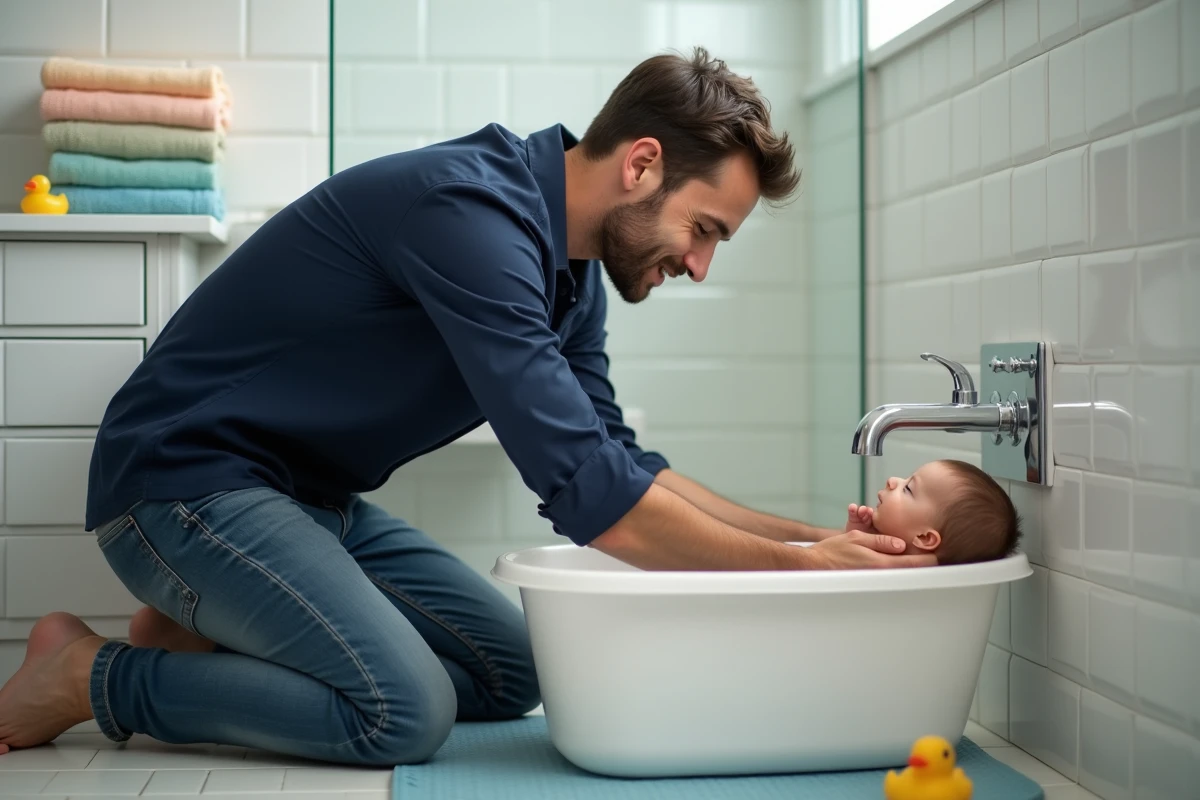
Sensorial Overload During Baby’s Bath
The bath is not just a thermal stimulus. It is a simultaneous combination of intense sensory stimuli: contact of water on bare skin, sound of flowing water, smells of cleansing products, brightness of the bathroom, change in body posture.
Research in sensory neuroscience shows that some babies, including typically developing children, process this accumulation as an overload. The infant’s nervous system, still maturing, does not filter this information as effectively as that of an older child.
Signals of Overload to Spot
A baby experiencing sensory overload during the bath does not always express discomfort through crying. We recommend monitoring these more subtle indicators:
- Disorganized movements of arms and legs, different from the usual agitation of the bath
- Looking away or closing eyes when the baby was awake and alert
- Stiffening of the torso or spreading of fingers
- Repeated yawning during the bath, well before the drying phase
These signals indicate that the baby’s sensory tolerance threshold has been reached. Continuing the bath beyond this point amplifies fatigue without additional benefits in terms of hygiene or relaxation.
Parental Stress and Baby Fatigue After the Bath
French PMI and maternity teams have documented a phenomenon that we regularly observe: the parent’s tension during the bath is directly transmitted to the infant. Observations reported in the journal Soins Pédiatrie/Puériculture show that babies bathed by very stressed parents exhibit more disorganized movements, crying, and a more unstable state of alertness after the bath.
This is not a matter of parental competence. The fear of dropping the baby, the worry about the water being too hot, the rush to finish before the crying: all of this generates quick movements, a tense voice, a stiff posture that the infant perceives and internalizes.
Reducing the Transmission of Stress
The solution does not come from abstract relaxation advice. It comes from material organization:
- Prepare all necessary items (towel, diaper, clothes, cleansing product) before undressing the baby, to avoid any hasty searches
- Maintain calm and regular verbal contact with the baby, even if they do not understand the words, as the speed and tone of voice affect their muscle tone
- Limit the duration of the bath to a few minutes for newborns, as the necessary hygiene time is much shorter than parents imagine
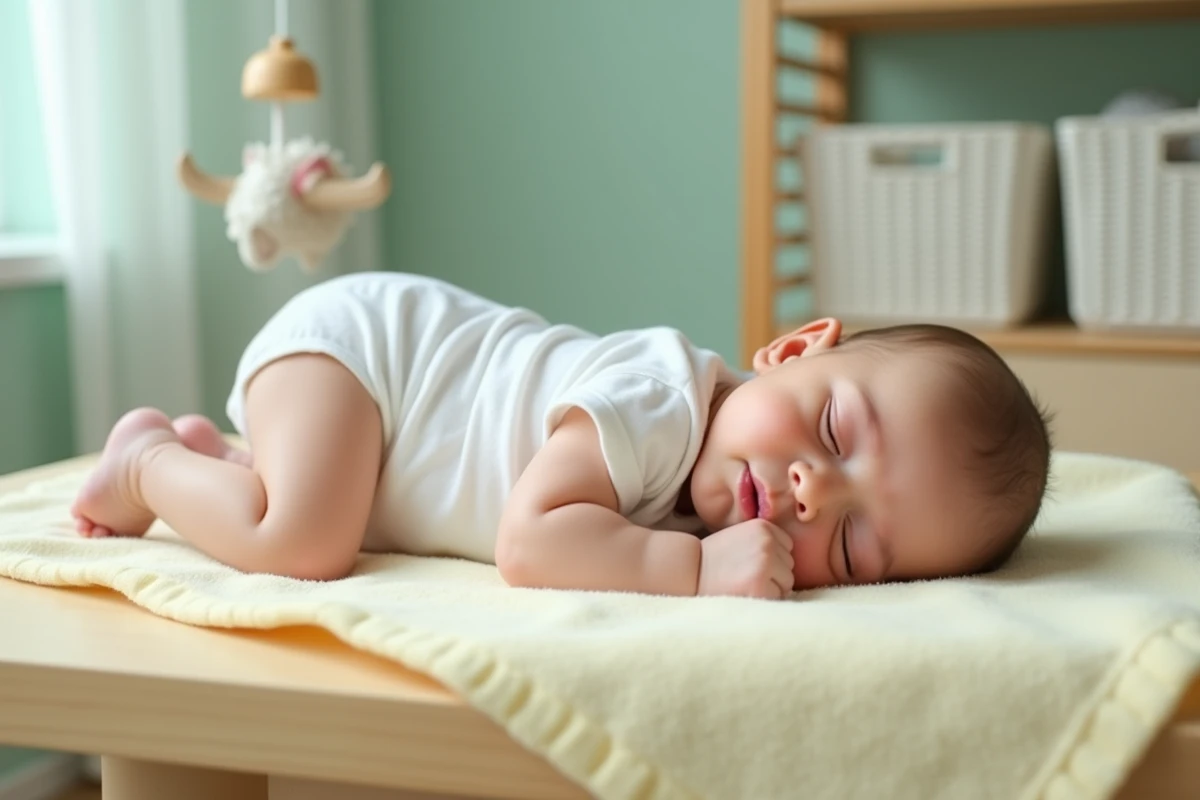
Duration and Frequency of Bath: Adjusting to Limit Baby Fatigue
A prolonged bath does not provide more cleanliness, but it increases energy expenditure and sensory stimulation. For an infant, a few minutes are sufficient for daily hygiene. Beyond that, the bath becomes a time of stimulation, which is not a problem in itself, as long as the baby has the capacity for it at that time of day.
Frequency also plays a role. An infant’s skin does not require a daily bath. A bath every two to three days, supplemented by a washcloth bath on the other days, preserves the skin’s hydrolipidic film and reduces the number of energy-consuming sequences throughout the week.
The Choice of Time of Day
A bath given to a baby who is already tired produces cumulative fatigue that can tip into paradoxical hyper-excitation: the infant appears agitated, refuses to sleep, even though they are exhausted. This phenomenon is common when the bath is systematically placed at the end of the day, after a long period of wakefulness.
We recommend observing the baby’s wake window. If the infant shows early signs of fatigue (rubbing eyes, decreased interaction), the bath may push them beyond their capacity. It is better to postpone the bath to the next wake window or to the following day.
The bath can tire a baby through three cumulative mechanisms: the effort of thermoregulation, the sensory load, and the absorption of parental stress. Adjusting the room temperature, shortening the duration, and choosing a time when the infant is rested transforms this potentially exhausting sequence into a time that the baby can truly enjoy.