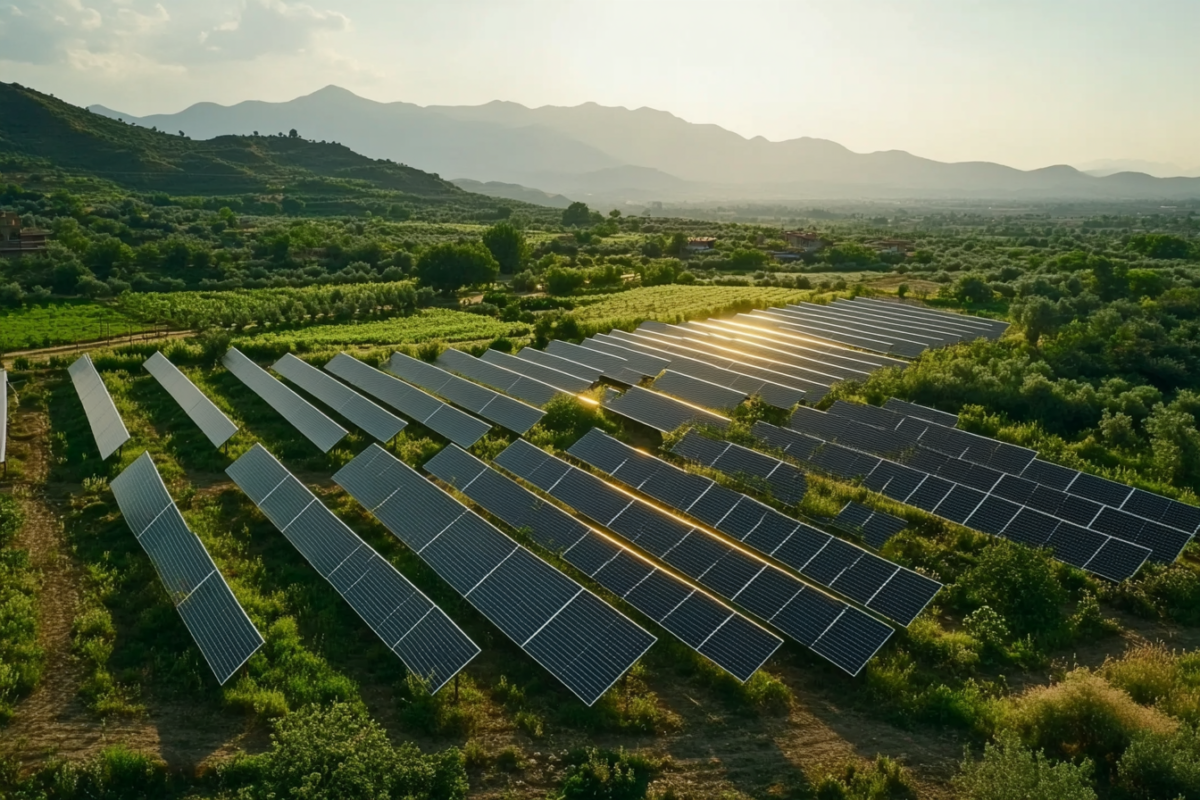
Thousands of square kilometers of empty roofs, solar rays hitting the earth relentlessly every day: this is the playground where solar panels are gradually establishing themselves. Transforming sunlight into electricity is no longer a distant utopia. In the face of demographic pressure and the growing thirst for energy, this technology stands out as a concrete lever to move away from the fossil-fuel era. Harnessing an inexhaustible, silent, and clean resource is revolutionizing our way of producing and consuming electricity. The solar revolution is no longer a matter of uncertain future: it is already part of our daily lives, pushing the limits of what is possible every day.
How Solar Panels Work
Solar panels, or photovoltaic modules, are not futuristic gadgets. Their principle: capture light to transform it into energy, simply. Each module houses photovoltaic cells primarily made of silicon. This material, as common as it is efficient, plays a key role in converting light into electricity.
Specifically, as soon as a photon strikes the surface of a cell, it causes electrons to move. This movement creates an electric current, immediately collected by fine metallic wiring, then channeled to an inverter. The inverter converts the direct current from the panels into alternating current, ready to power our household devices, from the simplest to the most sophisticated.
Another advantage: these installations require no moving parts. Their robustness and quietness clearly distinguish them from other electricity production systems. No turbine to maintain, zero nuisance for neighbors: their presence is easily forgotten, but their impact is tangible.
Environmental and Economic Benefits
Choosing solar panels is betting on a solution that makes a difference on several levels. Here’s what these devices change, for the environment as well as for your wallet:
- Less CO2: producing your electricity with the sun means turning your back on the emissions that suffocate the planet. A choice that aligns with the fight against climate change.
- Growing autonomy: individuals and businesses investing in their own installations reduce the amount of electricity purchased from traditional suppliers, gaining more control over their supply.
- Lower bills: while the initial cost is not negligible, the gradual decrease in energy expenses eventually offsets the investment, often faster than one might think.
- A sector that is hiring: the rise of solar energy boosts employment, whether in manufacturing, installation, or maintenance of equipment.
The Challenges of Solar Energy
The path to widespread adoption of solar panels is not without obstacles. Several challenges remain.
The initial cost can still be discouraging, even though prices are regularly dropping thanks to innovations and public policy support. Another difficulty: the performance of the modules fluctuates according to weather and geography, limiting their efficiency in less sunny regions. Storing the generated electricity remains a headache: batteries are still expensive, and their large-scale deployment is not yet achieved. Finally, massively connecting these installations to the electrical grid requires adapting our infrastructure and a long-term vision.
The Future of Solar Panels
Solar technology continues to evolve, opening the door to new possibilities for global energy.
New materials are revolutionizing the efficiency of solar panels: perovskite cells, for example, promise unprecedented yields. Solar farms are emerging in deserts or floating on bodies of water, proving that even extreme spaces can be utilized. At the same time, research on storage systems is advancing: more accessible and efficient batteries will pave the way for optimal use, even when the sky is overcast.
The movement has been set in motion. Governments, businesses, citizens: everyone is recognizing the energy challenge and committing, on their own scale, to the transition to renewables. By investing in innovation and supporting research, the potential of solar panels is expanding. This technological shift, far from being trivial, could reshape the energy landscape on all continents.
Reducing the reliance on oil and coal, betting on the light that streams through our windows every morning: solar panels embody this shift. They are no longer just trendy equipment but a symbol of commitment. We are approaching a horizon where the sun, generous, constant, universal, fuels our lives without noise, smoke, or regret. The choice is clear: continue as before, or build a vibrant and bright future today, guided by the quiet power of solar energy.