Every year in France, thousands of people face discomfort, a burn, or cardiac arrest without leaving their homes. The ability to react in the first minutes often determines the severity of the consequences. Since March 2026, a common national reference published by the CESU and the French Society of Emergency Medicine updates emergency gestures and care based on the most recent scientific data, rendering some previous recommendations obsolete.
National Reference 2026 on Emergency Gestures: What Has Changed
In March 2026, new national recommendations covering cardiac arrest, alerting emergency services, and the use of defibrillators were published. These recommendations are also based on the guidelines from the European Resuscitation Council published in October 2025. The advice published before this date may be incomplete, particularly regarding the sequence of cardiopulmonary resuscitation.
The alert protocols and the role of the automated external defibrillator (AED) have been clarified. For a household, this means that first aid training taken several years ago may no longer reflect best practices. Ensuring that one’s training aligns with this 2026 reference is often a neglected first step in prevention.
To delve deeper into health emergencies on Kafkaiens, several resources detail the appropriate gestures room by room in a home.
Geolocated Alert Applications: A Relay Before Emergency Services Arrive
Few households integrate digital tools into their home emergency plan. Applications like SAUV Life, Staying Alive, or Permis de sauver allow the SAMU or firefighters to call on trained and geolocated volunteers near a cardiac arrest victim, even before the medical team arrives.
The system operates on a simple principle: the registered volunteer receives a notification when a cardiac arrest is reported in their vicinity. They can then go to the scene to start chest compressions or use a nearby AED. This system depends on the emergency service of the department: not all areas have activated it, and it is not the FR-Alert system that sends messages to all phones.
Installing one of these applications on one’s phone does not replace calling 15 or 18. However, in a home context where only one person is present with the victim, the geolocation of a trained neighbor can save crucial minutes.
Isolated Elderly People at Home: The Fragile Link in Health Emergencies
Repeated heatwaves have highlighted the vulnerability of elderly people living alone. Early identification of these individuals remains a major challenge for health authorities and hospital actors. A health emergency involving an isolated person is complicated by the absence of a witness capable of raising the alarm.
The municipal register of vulnerable individuals allows a town hall to record fragile residents and trigger targeted actions in case of a heatwave or health crisis. Registration is voluntary, which limits its reach: many affected individuals are unaware of its existence or do not take the step to register.
Several technical solutions attempt to fill this gap:
- Alert buttons with geolocation, worn on the wrist or around the neck, that transmit the person’s position to a call center or a designated relative.
- Automated voice call devices that contact a predefined list of numbers when a sensor detects a fall or prolonged absence of movement.
- The regular visit of a caregiver or a designated neighbor, included in an informal but structured protocol with the family.
Field feedback varies on the actual effectiveness of these tools. An alert button is useless if the person does not wear it, and a fall sensor sometimes generates false alarms that end up being ignored. The complementarity between technology and human connection remains the only reliable approach to reduce risk.
Home Health Emergency Kit: Contents and Limitations
Creating an emergency kit is included in the guide “All Responsible” distributed by the government. Beyond the classic recommendations (water, flashlight, battery-operated radio), the health dimension deserves specific attention for home use.
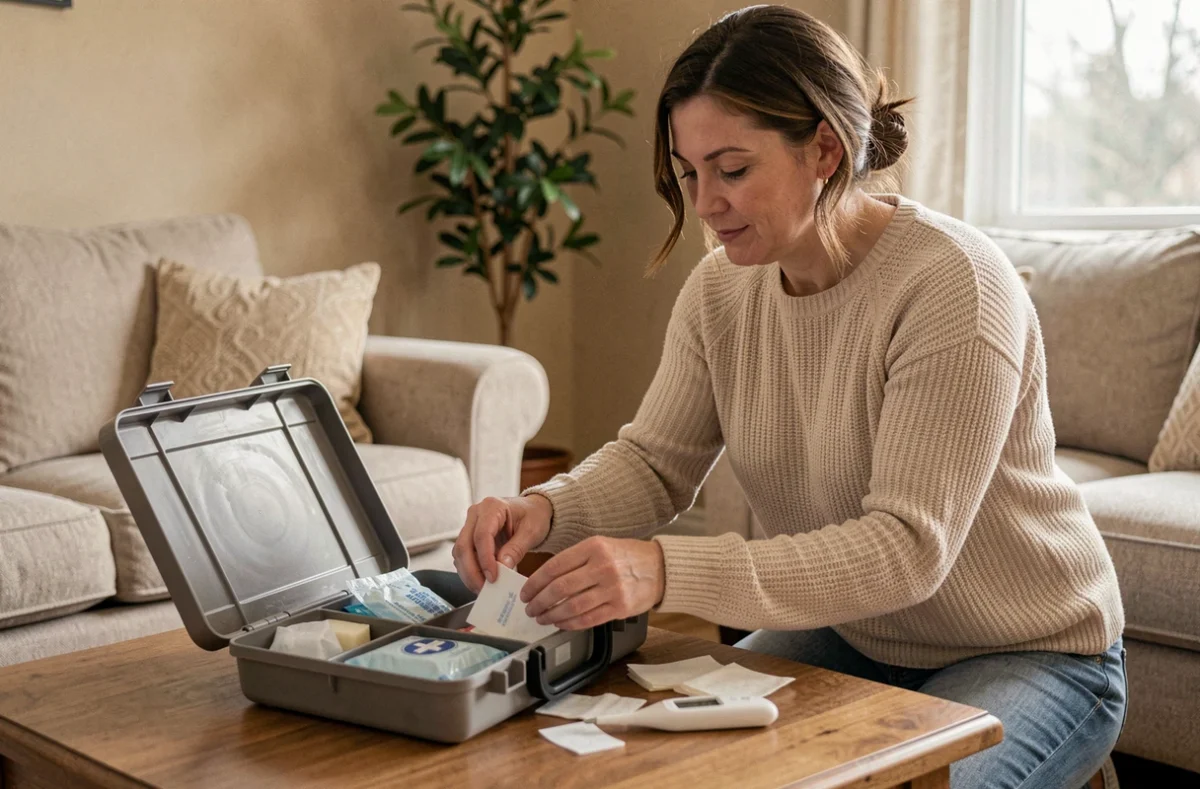
An appropriate home health kit should contain:
- Surgical or FFP2 masks fitted to the face, useful in case of infectious illness within the household to limit spread.
- A reliable thermometer, sterile compresses, saline solution, and a survival blanket.
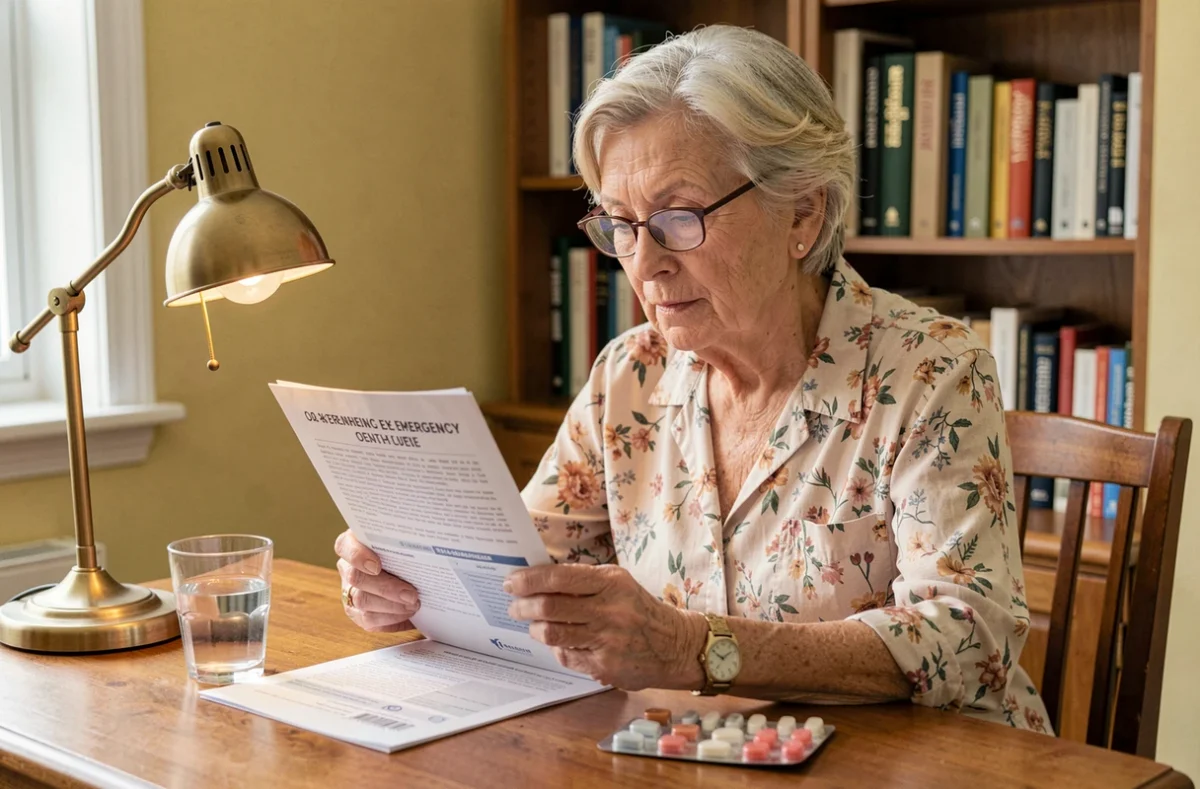
- Current prescriptions, a copy of medical information (allergies, treatments, blood type), and the contact details of the treating physician.
- For households with children: pediatric paracetamol (checking the expiration date every six months) and doses adjusted to weight.
A kit not checked for over a year gives a false sense of security. Expired medications, dead batteries, or outdated phone numbers turn the kit into a useless object. Setting an annual verification date, for example, at the time of the clock change, helps keep the kit operational.
Infectious Diseases at Home: Barrier Gestures and Isolation of the Sick Person
The COVID period established certain reflexes, but their application in daily life has relaxed. When a household member contracts an infectious disease (flu, gastroenteritis, respiratory virus), simple measures can limit the contamination of other occupants.
Wearing a mask properly fitted over the nose by the sick person significantly reduces the spread of respiratory viruses. Ventilating the room several times a day remains the most effective and least applied gesture. Washing hands with soap and water for at least twenty seconds, using a disposable tissue, and disinfecting frequently touched surfaces complete the measures.
For young children, the difficulty lies in wearing a mask, which is often impossible. Isolating the sick person in a dedicated room and reserving individual utensils and towels limits direct contact. None of these measures alone is sufficient: it is their combination that produces a protective effect.
Managing a health emergency at home relies less on equipment than on preparation. A household where members know emergency numbers, have a verified kit, and have undergone recent first aid training significantly reduces the risk of serious complications. The national reference 2026 provides an updated framework for this preparation, and geolocation digital tools add a layer of responsiveness that did not exist a few years ago.