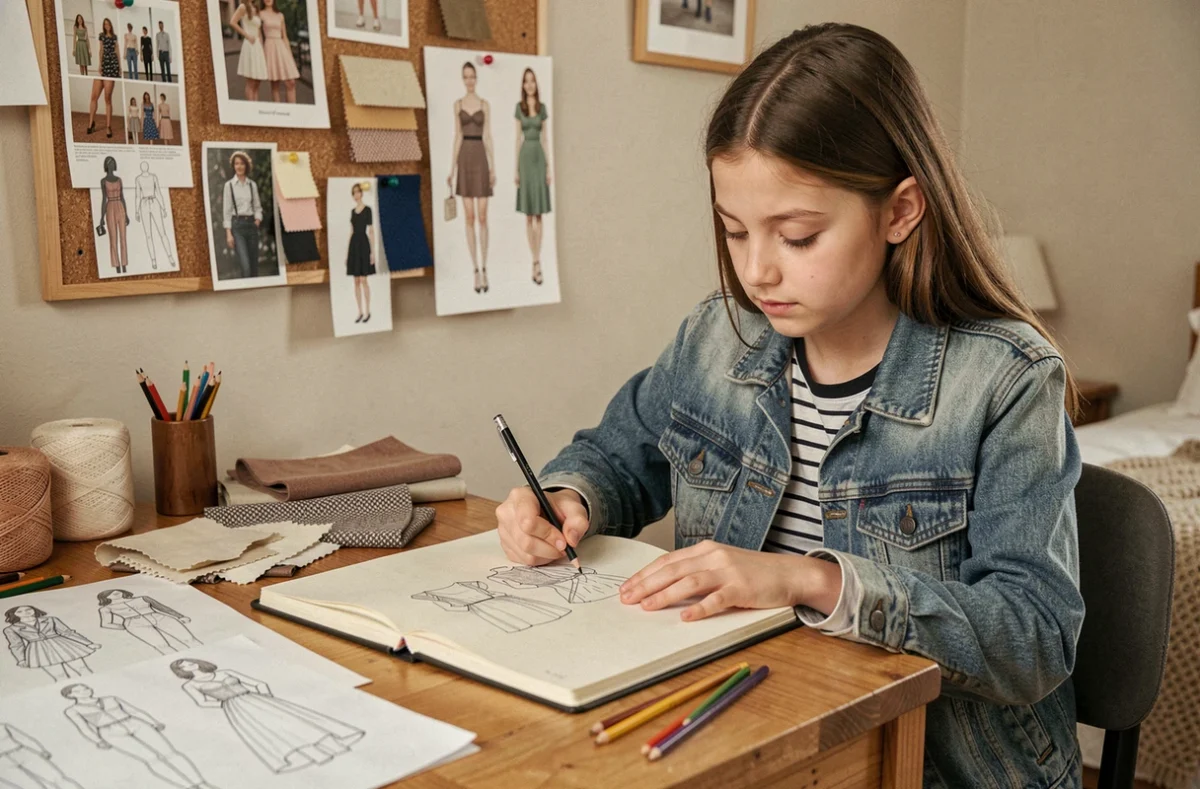
At 12 years old, fashion design is not just about drawing dresses in a notebook. It is a structured learning process that involves technical drawing, understanding materials, and the ability to carry a project from the initial sketch to the finished garment. Here, we detail five concrete areas to transform an attraction to fashion into real textile creation skills.
1. Develop your passion for fashion and design
Curiosity alone is not enough. What distinguishes a future creator from a mere enthusiast is the ability to analyze what they observe. Looking at a garment in a shop window and wondering how the sleeve is constructed or why the drape of the fabric works is already a stylist’s reflex.
We recommend creating a thematic inspiration notebook early on, organized by colors, textures, or silhouettes. This physical moodboard forces one to make visual choices, prioritize, and eliminate. This is exactly the work that an art director does at the beginning of a collection.
Consulting online fashion show archives, browsing specialized magazines, or visiting textile exhibitions in decorative arts museums enriches visual vocabulary. To deepen this approach, a guide on tips for young fashion enthusiasts helps structure the first steps. The goal is not to imitate a trend, but to understand why certain combinations of materials and proportions work.
2. Learn the basics of fashion drawing
The fashion figure follows specific proportions, distinct from classic anatomical drawing. The body is represented at about nine heads tall (compared to seven in realistic anatomy), which elongates the legs and allows the garments to be highlighted rather than the model.
Start by mastering the static front silhouette, then work on three-quarter and profile poses. Each posture alters the drape of the fabric and the readability of technical details (darts, pleats, decorative seams).
Applying color also requires distinct learning. Alcohol markers, watercolor, or gouache render textures differently. A jersey is represented with fluid lines and soft shadows, while denim uses drier hatching. This skill, called material rendering, is what differentiates an amateur sketch from a usable board.
3. Discover sewing and pattern making
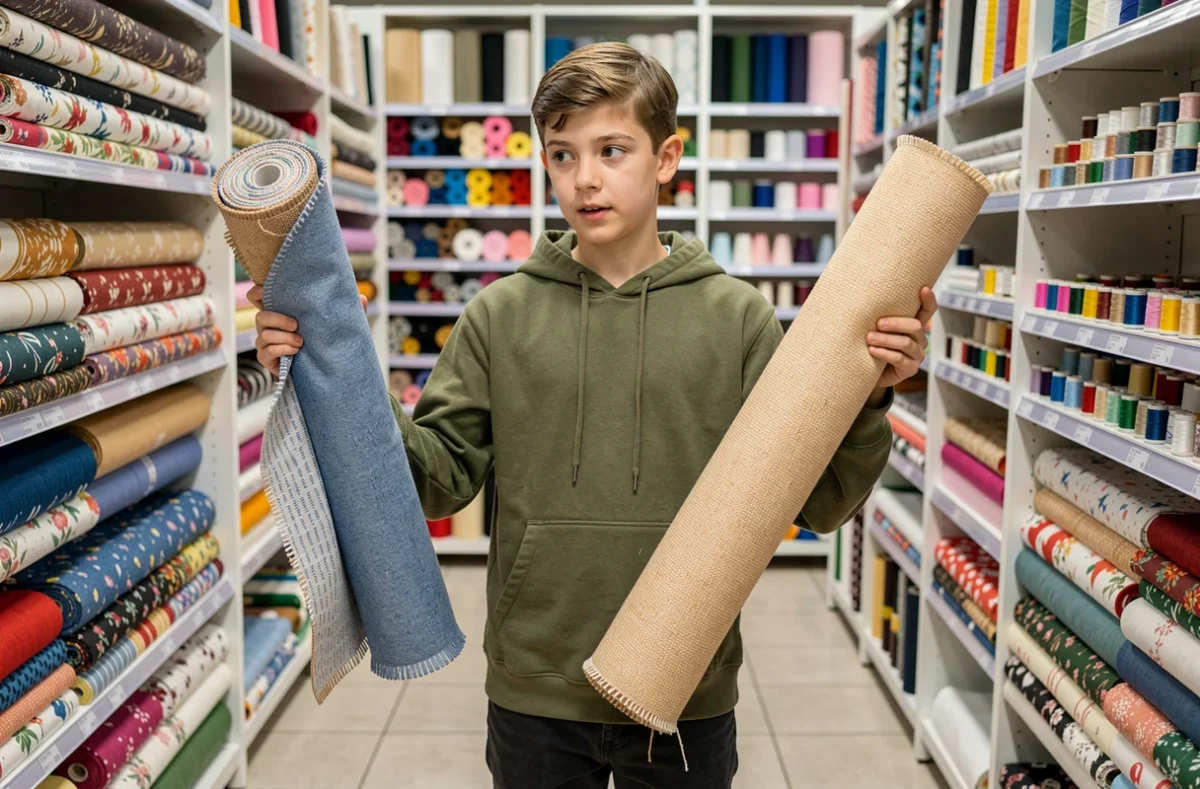
Drawing without transitioning to volume remains incomplete. A stylist who does not understand how a pattern is constructed will produce unfeasible sketches. At 12 years old, the introduction to pattern making begins with simple pieces: a straight skirt, a tote bag, a basic neckline top.
Taking measurements (bust, waist, back length) and transferring them onto pattern paper forms the technical foundation. The first stitches should ideally be done on a machine suitable for beginners, with a straight stitch and a zigzag stitch.
- Learn to read a commercial pattern before creating your own, to understand seam allowances and assembly markers
- Work first on muslin (calico or basic cotton) before using a final fabric
- Get familiar with finishing techniques: hems, overlocking, bias binding, which affect the garment’s fit and durability
A often overlooked point: safety must be integrated from the design stage. Even for a project made at home, clothing intended for children is subject to regulatory constraints. The European standard EN 14682:2014 specifically regulates cords, buttons, and decorations that could cause entanglement or choking.
4. Participate in workshops or creative courses
Specialized fashion design holiday workshops offer a framework that self-taught work cannot replace: guidance from professionals in the textile sector, suitable materials, and above all, an external perspective on creations.
In Paris, the Centre Paris Anim’ Oudiné offers a “Fashion Design / Sewing” activity for ages 8-15 for the 2026-2027 season, covering pattern learning, cutting, and model creation. Other organizations like La Couture Brigade organize three-day immersions for ages 13-16, including moodboarding, color research, and creating a mini-collection supervised by professional stylists.
The main interest of a workshop is not technical but methodological. Working under time constraints, presenting one’s work to a group, receiving critical feedback: these skills are not acquired alone in one’s room.
- Check that the instructor has professional experience in fashion design or pattern making, not just in teaching
- Prefer workshops that lead to a concrete outcome (finished garment, collection board) rather than just an introduction
- Ensure that the workshop provides materials, as the investment in fabrics and supplies can weigh on the family budget
5. Create your own collections and projects
The transition from a one-off workshop to a personal project marks a decisive step. Designing a mini-collection of three to five coordinated pieces requires thinking in terms of range coherence: a common color palette, complementary material choices, and a visual thread.
We recommend structuring the project as a professional would. Define a theme, create a moodboard, sketch the silhouettes, select the fabrics, make at least one muslin, and then sew the final piece. Documenting each step in a notebook or digital portfolio is a concrete asset for a future application in textile training.
Labeling also deserves attention. Even for handmade creations, mentioning the fabric composition and care instructions is good practice that familiarizes one with industry obligations. A structured portfolio from age 12 is worth more than a late diploma in the eyes of many fashion schools that prioritize the creative process and the ability to carry a project from start to finish.
Sharing creations on a dedicated account (supervised by a parent) allows for gathering external opinions and confronting public perception. This is not promotion; it is a visual communication exercise that is an integral part of a stylist’s job.