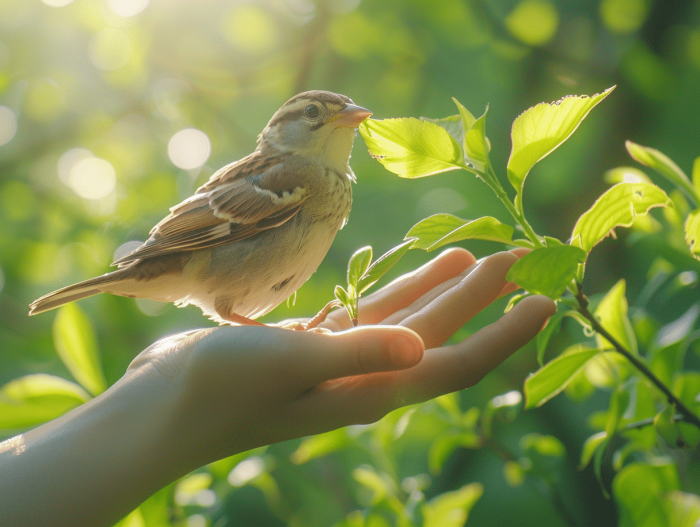
Spring and summer are seasons during which it is common to come across a young bird stranded far from its nest. Often, people are tempted to intervene, thinking that the animal is in distress. However, you must understand the natural behavior of birds to avoid disrupting their development. If a young bird appears abandoned, it may be in a learning phase where its parents are watching from a distance. Before taking action, you need to ensure the necessity of human help while knowing the gestures that will truly support the bird without harming it.
Assess the situation and act accordingly
When encountering a young bird found alone, the first step is to observe. A nestling on the ground is not necessarily in danger. Recognizing a nestling in the fledging phase is essential before any intervention. These young birds, although out of their nest, remain under the watchful eye of their parents who continue to feed them. Species such as the blackbird and the starling spend time on the ground before their first flight. In contrast, the presence of a swift or an owl, which do not live on the ground, is a clear sign of distress.
Do you notice signs of injury or weakness? Is the nestling having difficulty moving, does it have abnormally ruffled feathers, or does it seem lethargic? In these cases, help is likely needed. Be cautious: direct intervention can be counterproductive. Avoid giving water or food, as improper administration can worsen the animal’s condition. Nestlings require a specific diet that varies by species, and a wrong gesture could be fatal.
The presence of cats or other predators poses a direct threat. If the nestling is exposed, consider placing it higher up, sheltered, but still nearby so that the parents can find it. Ensure that the chosen spot is secure and out of reach of predators. A cardboard box with a few holes can serve as a temporary shelter if necessary.
If the nestling is indeed injured or if you are certain that the parents are no longer present, contact a wildlife rehabilitation center or the League for the Protection of Birds (LPO). These organizations have the expertise required to care for the animal and maximize its chances of survival. It is not advisable to attempt to care for a wild bird on your own, as this requires specific knowledge and skills.
Care and rehabilitation of the nestling
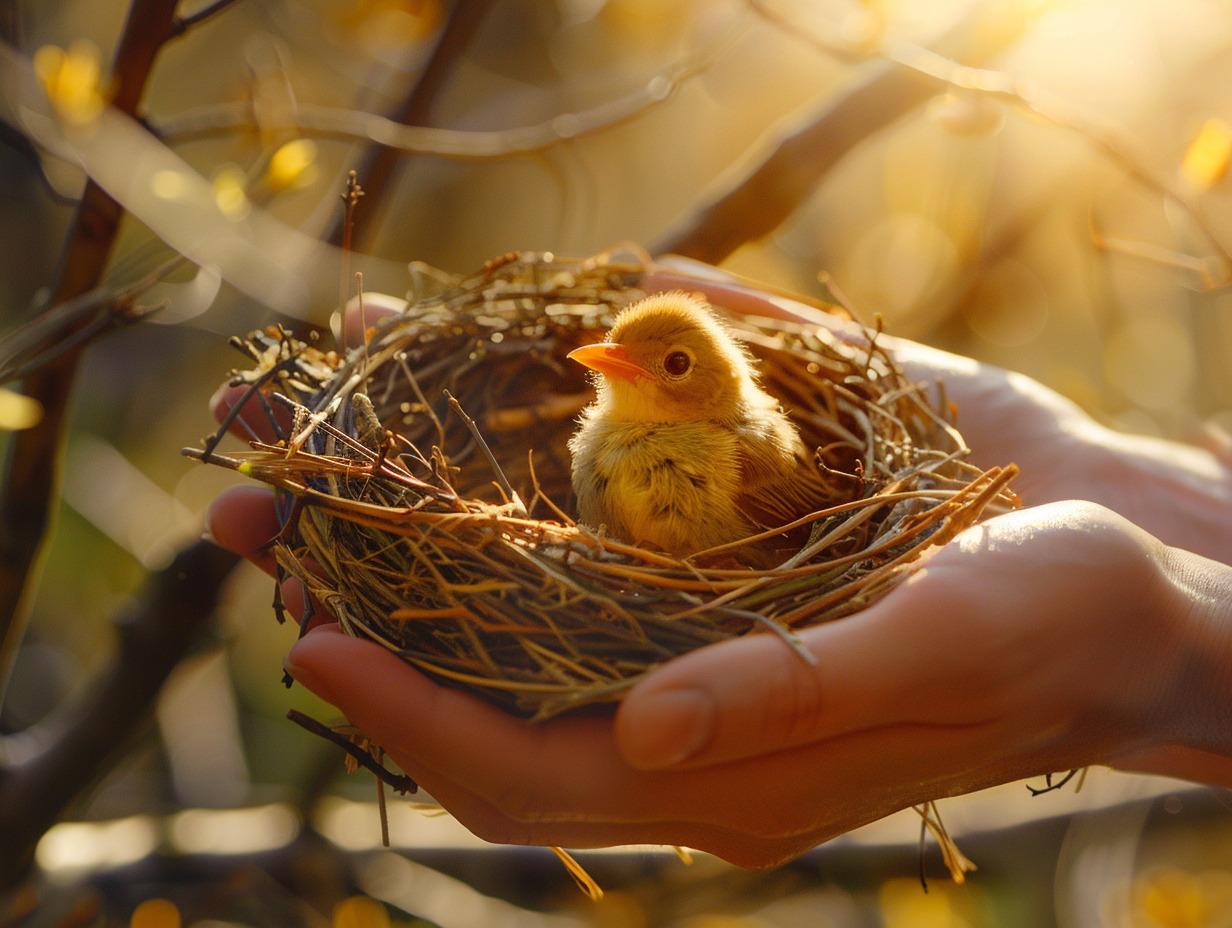
In the event that a rescued nestling requires care, the rehabilitation center or the League for the Protection of Birds (LPO) are the appropriate refuges. These specialized facilities aim to restore the health of injured birds and prepare them for their return to the wild. Anne-Laure Dugué, head of wildlife rehabilitation centers at the LPO, emphasizes that the expertise and equipment available at these places are crucial for increasing the chances of survival of the admitted animals.
Care at a rehabilitation center includes a thorough veterinary assessment, followed by a diet and care tailored to each species. For carnivorous birds like raptors, this may mean providing red meat or specific prey. The blackbird, being omnivorous, will benefit from a varied diet, including fruits and insects. You should not feed or hydrate a bird without the advice of a specialist, as an inappropriate diet can worsen the animal’s condition or even lead to its death.
The process of rehabilitation involves gradually acclimating the bird to wild life by providing a stimulating and secure environment that mimics its natural conditions. This may include flights in suitable aviaries or interactions with other birds of the same species to encourage natural social behaviors. François Omnes, head of the Uses and Biodiversity Management Service at the French Office for Biodiversity (OFB), reminds us that the ultimate goal is to restore the bird’s full autonomy so that it can fend for itself once released.
The participation of volunteers is also a cornerstone of the operation of rehabilitation centers. Their commitment is essential to maintain the continuous flow of operations and ensure the well-being of the birds. If you witness the distress of a wild bird, contact the nearest rehabilitation center or the LPO for assistance. These entities, which care for around 20,000 animals per year, mostly birds, have the expertise and compassion necessary to intervene effectively.