
Run Flat tires represent a technological innovation in the automotive world, providing drivers the ability to continue their journey even after a puncture. This feature adds an extra dimension of safety and convenience, eliminating the immediate need to change the tire on the side of the road. These advantages come with important considerations, such as potentially reduced driving comfort and a higher cost compared to standard tires. Examining the benefits and trade-offs of Run Flat tires is essential for consumers to make an informed choice suited to their driving needs.
The features of Run Flat tires: an innovative safety technology
Reinforced sidewalls and flat running: The Run Flat technology relies on particularly reinforced sidewalls that keep the tire in place even in the event of a loss of pressure. This allows the vehicle to continue to drive at a moderate speed over a certain distance, often up to 80 kilometers, even with a flat tire. This flat running capability reassures drivers and removes the urgency of immediate replacement on the roadside, a significant safety advantage.
Recognizing a runflat tire can be done through various specific markings depending on the manufacturers like Bridgestone, Michelin, or Continental. These brands place symbols such as RFT, SSR, or ZP on the tire’s sidewall, indicating this ability to run deflated. The tire pressure monitoring system (TPMS), mandatory on new vehicles, plays a crucial role in alerting the driver to a loss of pressure, thus allowing full benefit from the advantages offered by Run Flat tires.
The rim for runflat tires is also designed to accommodate the specific constraints of these tires, with reinforcements that contribute to their ability to run flat. This synergy between the rim and the tire ensures the safety and performance of the vehicle in the event of a puncture. However, it remains essential that the vehicle is equipped with a TPMS to guarantee early warning and allow the driver to take necessary measures.
The DriveGuard technology, developed alongside Run Flat technology, aims to offer a more flexible and less expensive alternative. This technology is designed to fit a wider variety of vehicles, without the specific constraints of traditional Run Flat tires. It thus paves the way for the democratization of safety, allowing a broader range of motorists to access this innovation.
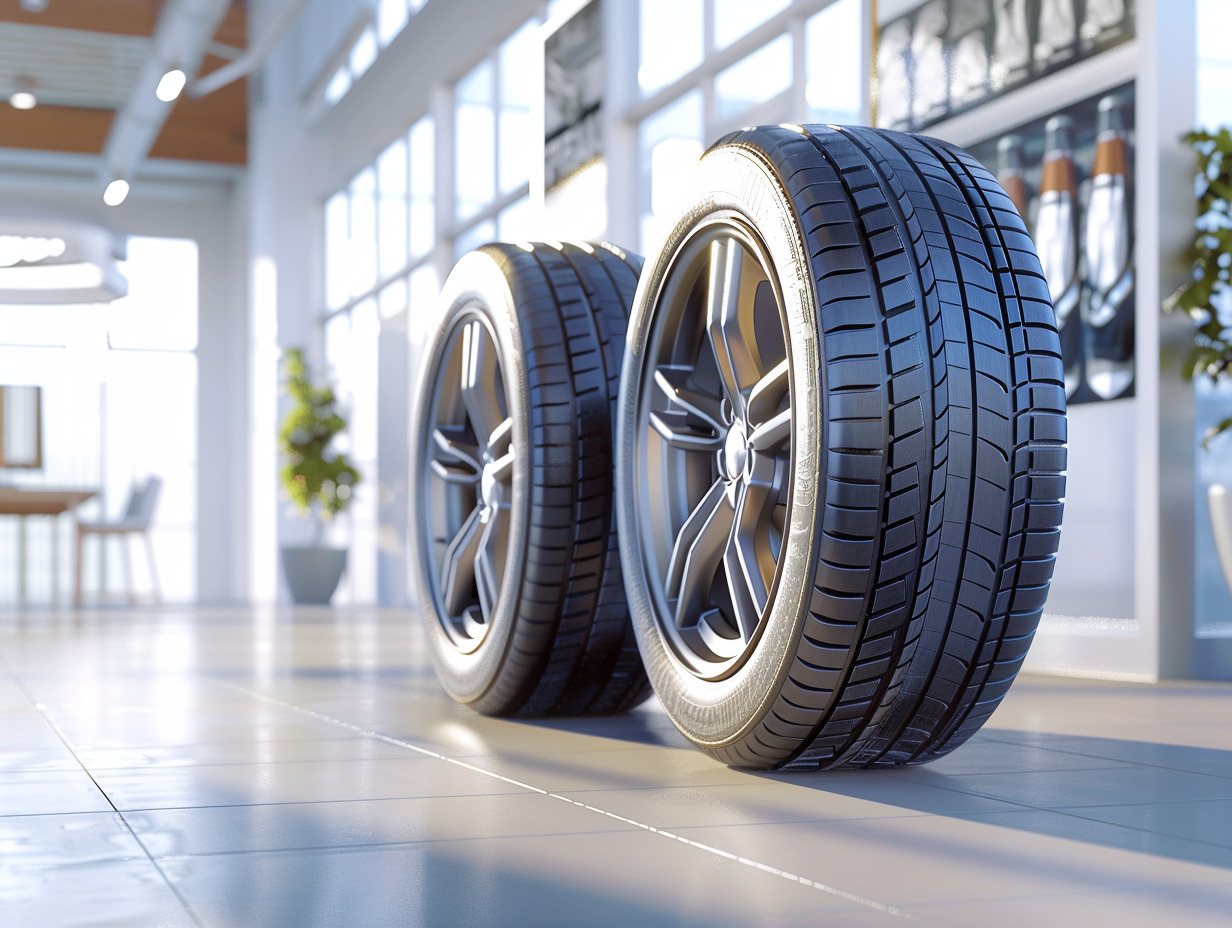
Advantages and disadvantages of Run Flat tires: a compromise to evaluate
Increased range and safety: Run Flat tires offer the undeniable advantage of allowing continued driving even in the event of a total loss of pressure. Gone is the urgent need for a spare tire; these reinforced tires allow you to continue your journey to a qualified workshop. This technology is favored by manufacturers like BMW, which recommends it for its models, highlighting the gains in terms of safety and space. If safety is considered the top priority, the Run Flat tire presents itself as a preferred solution, thanks to the stability it provides to the vehicle even in the event of sudden depressurization.
The compromise is also expressed in terms of driving comfort. The reinforced sidewalls, while ensuring safety, also mean a rigidity that affects the damping of road irregularities. The feel is therefore less supple compared to normal tires, a difference particularly noticeable when passing over bumps. Brands like Goodyear or Pirelli, constantly seeking a balance between comfort and safety, are working to improve this technology to reduce this perception gap.
Finally, let’s address the issue of durability and cost. Run Flat tires, due to their specific construction, often come at a higher price than their standard counterparts. They may exhibit faster wear due to the additional strain imposed by their reinforced structure. Seasonal use, particularly for winter tires, may require special attention when choosing between Run Flat and conventional alternatives. Motorists are encouraged to evaluate the cost-benefit ratio, considering the frequency of their travels and typical driving conditions.