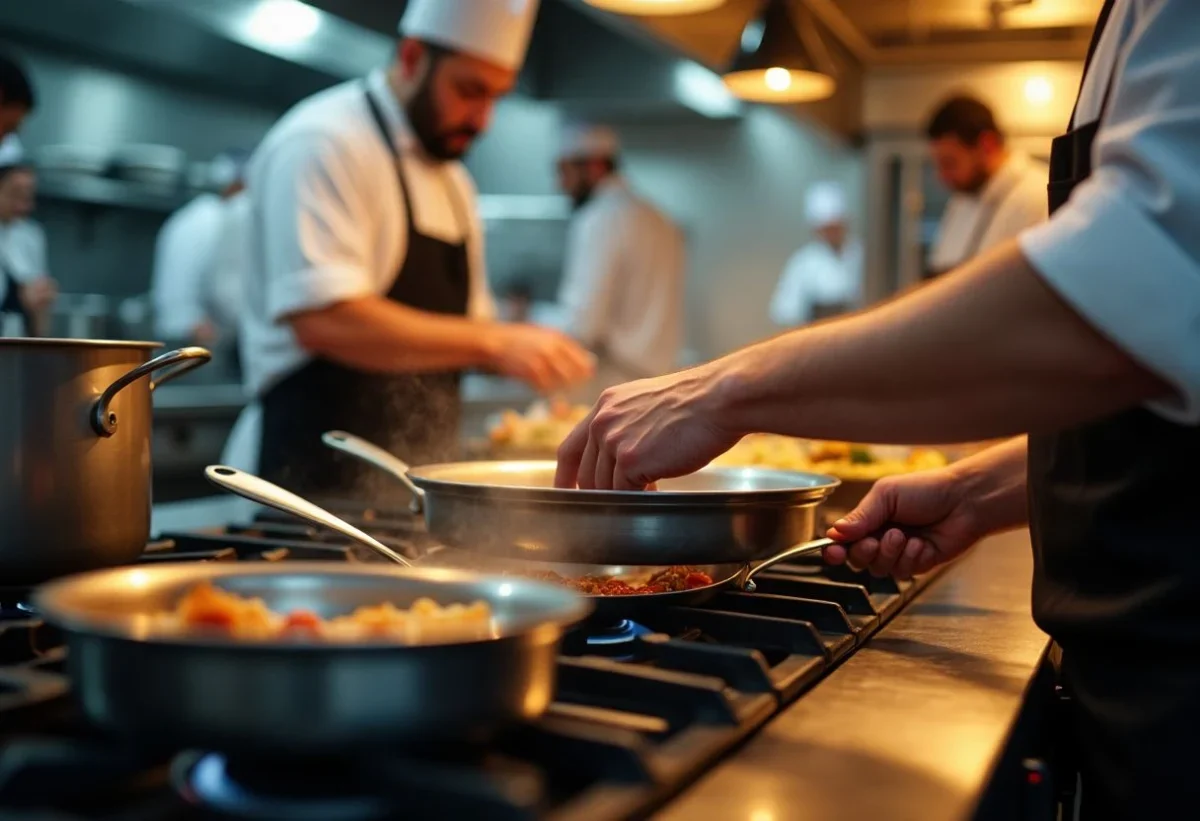
Behind the scenes of Michelin-starred restaurants, where flavors come to life and each plate tells a story, the selection of the perfect pan plays a often overlooked but essential role. Renowned chefs leave nothing to chance, especially not the choice of this fundamental tool that allows them to elevate the simplest ingredients into extraordinary culinary creations. It’s not just a matter of aesthetics, but of science and culinary know-how. From copper to stainless steel, through titanium or cast iron, each material has its particularities, advantages, and disadvantages. The art of choice lies in understanding these specifics that meet the demands of each dish.
The Essential Copper Pan
Copper has long been the material of choice for demanding chefs due to its unmatched thermal qualities, but its popularity is due to much more than just its ability to conduct heat quickly.
Copper pans allow for even heat distribution, a crucial element for preparations requiring delicate and uniform cooking. They are ideal for fine sauces and reductions, where precise temperature control is essential. Their attractive appearance adds a touch of elegance to the open kitchens of fine restaurants.
Despite their many advantages, these pans require rigorous maintenance. Copper must be polished regularly to avoid oxidation and maintain its thermal properties. Every detail matters to ensure that the pan continues to shine, not only aesthetically but also in terms of culinary performance.
Stainless Steel Pans: Versatility and Durability
A symbol of robustness and versatility, stainless steel is a major ally for modern chefs. It is particularly appreciated for its durability and ability to withstand high temperatures.
- Versatility: Perfect for searing, deglazing, and simmering, stainless steel adapts to a wide variety of culinary techniques.
- Maintenance: Easy to clean, it is dishwasher safe, making it a practical choice in a professional environment.
- Neutrality: Unlike copper, stainless steel does not chemically interact with food, ensuring that flavors remain intact.
This catering material ensures consistent cooking while remaining unyielding, even after years of intensive use. In a kitchen, where time is a precious commodity, its low maintenance makes it a top choice.
Cast Iron Pans: Tradition and Intense Flavors
For chefs seeking slow cooking and unparalleled flavor intensity, cast iron remains an unbeatable reference, reminiscent of the authentic flavors of yesteryear.
This material retains heat longer, making it particularly suited for slow and braised cooking. Cast iron pans require a preheating period, but once hot, cast iron offers optimal heat distribution, allowing for perfect searing of meats and the development of rich aromas.
Despite their considerable weight, these pans are highly valued for their durability and ability to enhance flavors with an incomparable depth. They require specific maintenance to prevent rust and preserve their natural coating.
Modern Innovations: Titanium and Composite Material Pans
With the evolution of culinary techniques, new materials are emerging, meeting the needs of chefs in search of lightness and enhanced performance.
- Titanium Pans: Ultra-light and durable, they offer seamless cooking thanks to advanced non-stick surfaces and are often preferred for preparations requiring little fat.
- Composite Materials: The combination of different materials allows for improved energy efficiency, ensuring even cooking while being suitable for induction cooktops.
Recent innovations offer endless possibilities for bold chefs looking to push the boundaries of traditional cooking. These modern pans, although often costly, represent an investment in quality and culinary experimentation.